
Once a Guardian, Always a Guardian
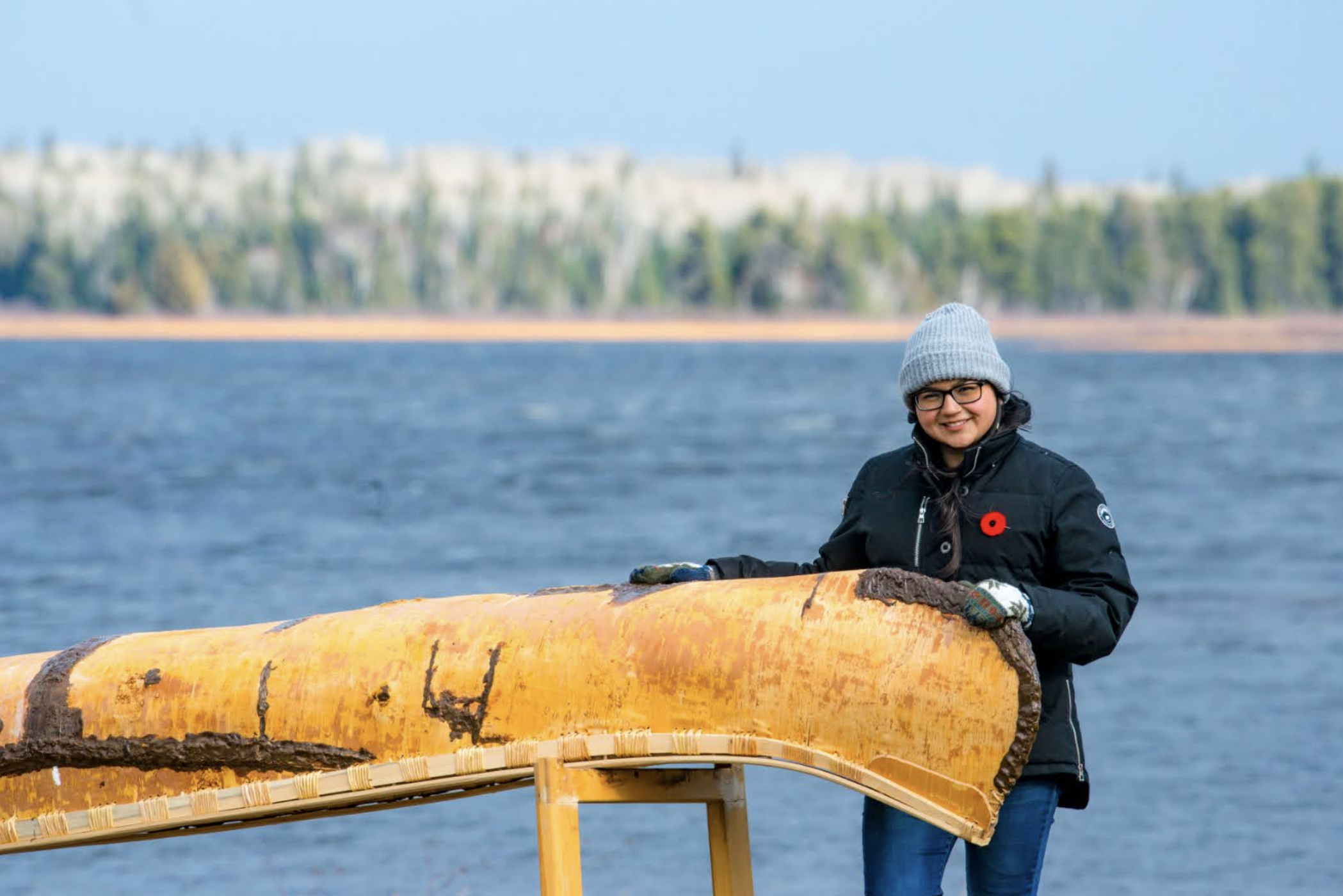
Amberly Quakegesic with her first canoe build with the Wahtokowin Guardians Program in 2020. All photos credit: Amberly Quakegesic
I still remember our very first float, out on the Kebsquasheshing River with Chuck Commanda around five years ago. Feeling light as a feather, it was like floating on a leaf, the feeling of weightlessness. All I could think about was how my ancestors floated on these waters in birch bark canoes for thousands of years, traveling, hunting, fishing, singing, laughing, thriving. I was there as part of the Wahkohtowin Development Guardians program, where we learned how to harvest and build a traditional birch bark canoe. At the ceremonial launch, I was honoured to join Chuck in the voyage and was overwhelmed with emotions and a deep sense of victory because we had harvested and processed all of these materials from the land with our very own hands!
From the very start, I knew we were learning how to build canoes, but I didn’t expect to also start rebuilding my relationship with the land, with my ancestors and ultimately with myself.
It's hard to describe what this journey has given me because there is just so much to be thankful for. From the pride I feel when we give thanks and lay our Semaa (traditional tobacco offering), to the empowerment I feel when we float our canoes, the mentorship I receive from Chuck means everything to me.
It would not have happened without the Guardians Program which allowed me to join cultural spaces for the first time, surrounded by good medicine, good people, and teachings I didn’t even know I was searching for. Being a Guardian gave me the confidence I needed to dive deep into my history, my culture, and find work that’s meaningful to me and my ancestors. It’s helped me reclaim my identity and sense of pride in a way that nothing else ever has.
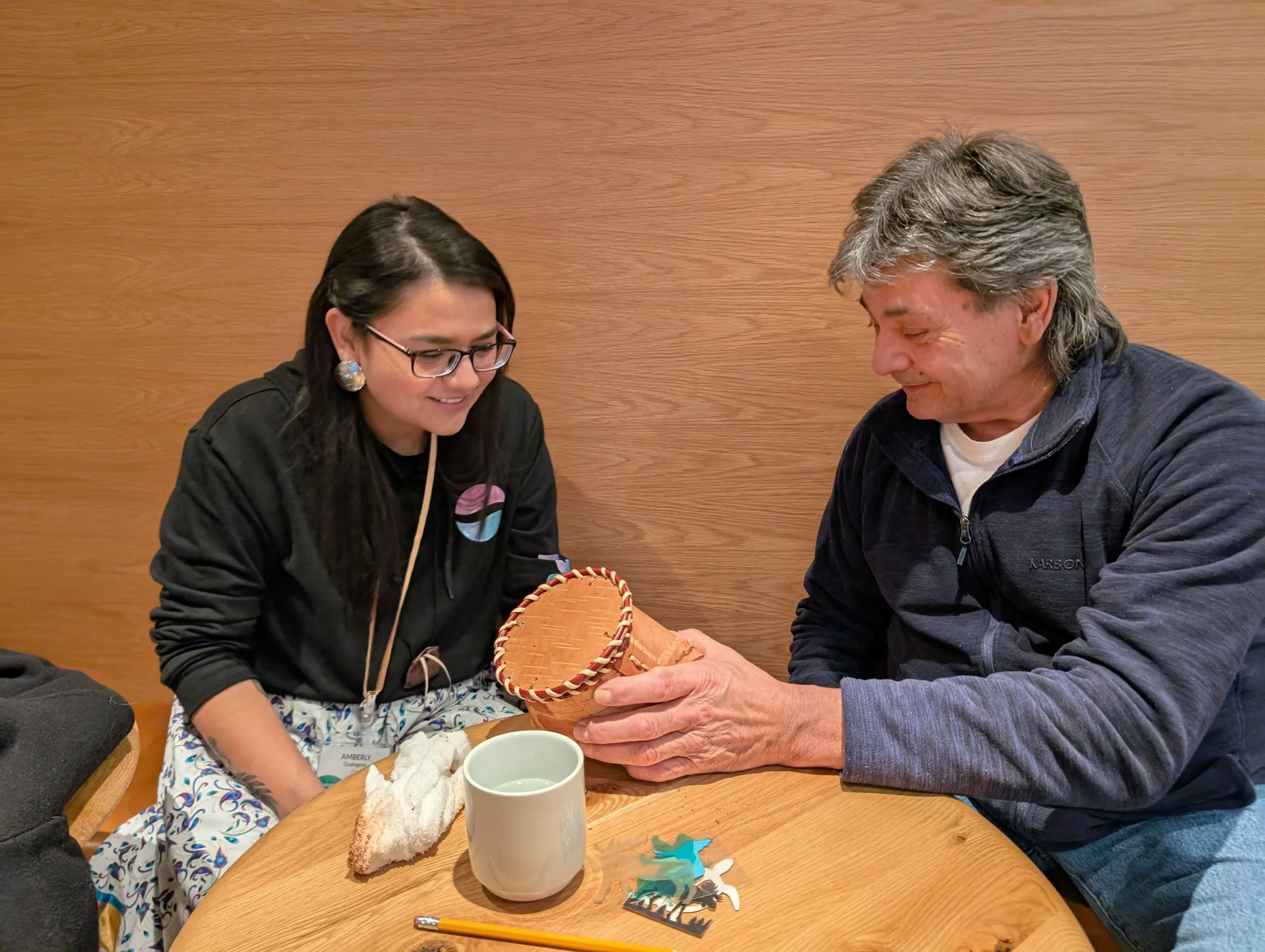
Chuck teaching me how to carve designs onto a Birch Bark basket that was made using “winter bark.”
As a young child, I was adopted and raised off reserve, disconnected from my culture, my community, and the history of my First Nation, Brunswick House. Like many Indigenous people in similar situations, I grew up with an incomplete understanding of the trauma that shaped the generations before me and how that trauma continues to shape both myself and the world around me. I walked between two worlds for a long time, carrying a quiet feeling I did not yet have words for, the belief that I wasn’t “Indigenous enough.”
I didn’t speak my language, I didn’t grow up around ceremony, and I didn’t have access to teachings that should have been mine all along. That absence creates an internal conflict that no one talks about and can be very isolating and hard to explain. I’ve learned that the feeling doesn’t come from us, it comes from what was taken from us. For a long time, the system that was designed to oppress Indigenous identity was succeeding, and so it makes me proud to be a part of this reawakening and it only strengthens my commitment to carrying these teachings forward in a good way.
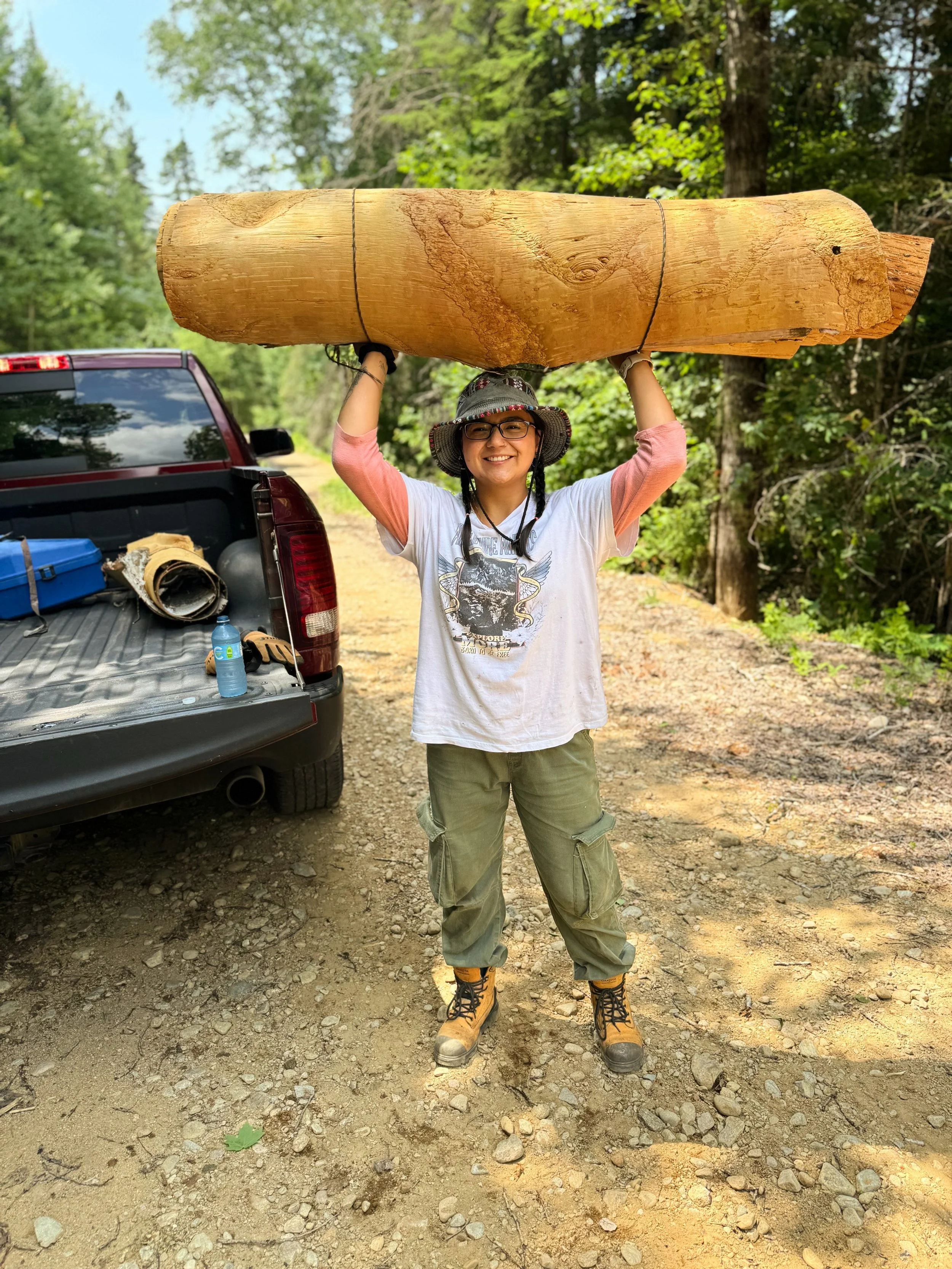
Showcasing a beautiful piece of bark we harvested and later used to build a canoe in Wabasca- Desmarais, AB.
As a Guardian, I got to spend a lot of time out on the land where I learned to pay attention to the seasons, to the medicines, the animals and to the responsibility that comes with harvesting from the land while ensuring it’s done in a good way. At the same time, I was learning about the heavy footprint that we leave on this beautiful planet, through resource extraction, the chemicals polluting our air and waterways, climate change, and so much more. It's a scary time to turn a blind eye. Luckily, Guardians get to meet so many inspirational and amazing people who have been trailblazing this path for decades, and this was how I met my mentor, and master canoe builder, Chuck Commanda.
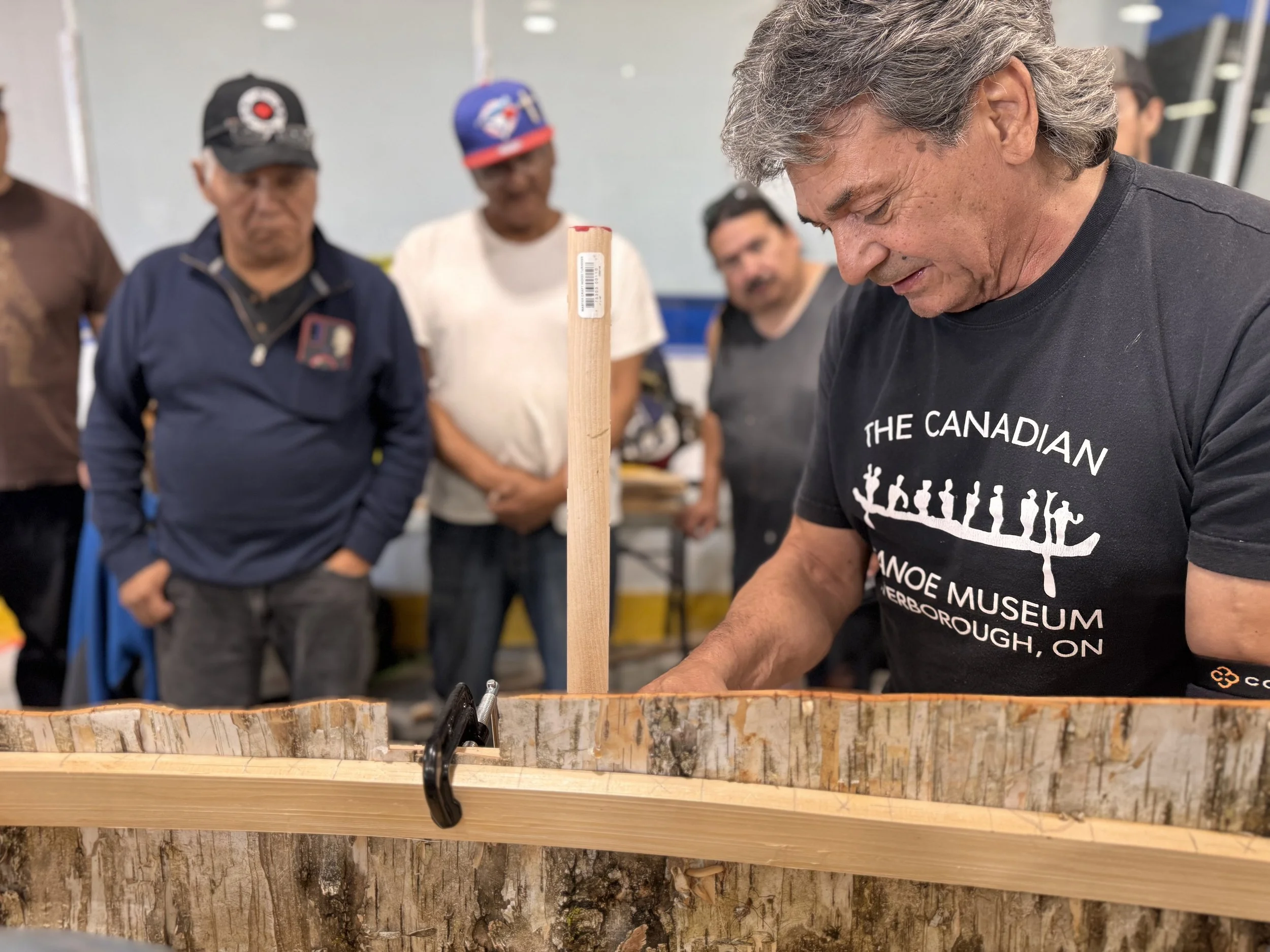
Chuck sharing his knowledge to an eager group of learners in Bigstone Cree Nation, AB.
Spending time on the land with a canoe builder completely changed the way I see the forest. Before I ever touched a crooked knife or learned to peel bark, being a Guardian reignited my love for the land, the water, the swimmers, the crawlers, the youth, the Elders, and even myself. It opened doors and pulled me closer to my identity and reminded me that belonging isn’t something we earn, it’s something we remember. Cultural revitalization didn’t feel like a new direction, it felt like home.
In February of 2025 I was able to transition to a full-time apprenticeship with Chuck, and if you had told me ten years ago that one day I’d be spending my summers learning alongside a master canoe builder, I don’t think I would have believed you. Not because I didn’t want it; it fits very naturally with who I am (and is one of the coolest jobs I’ve ever heard of), it was just not an option. But here I am, nine canoe builds later, living the dream with the understanding that I have a lot more learning and unlearning to do ahead of me.
I still remember how nervous I was, preparing to ask Chuck if he would take me on as a helper, not because I was afraid he would say no, but because I understood what I was really asking. When I was finally ready to ask him, he told me that he had been waiting. He also shared being thrilled to work with me because men and women have always traditionally brought balance to one another, especially when building canoes. His reaction meant the world to me. Saying yes meant I would be committing to carrying this knowledge forward with love, care, attention to detail, and to become a vessel for teachings that are meant to be passed on, much like the canoe itself. I don’t take that responsibility lightly and I look forward to having my own apprentices someday. Reclaiming something as sacred as canoe building matters, not just because it keeps traditions alive, but because it restores pieces of us that were lost.
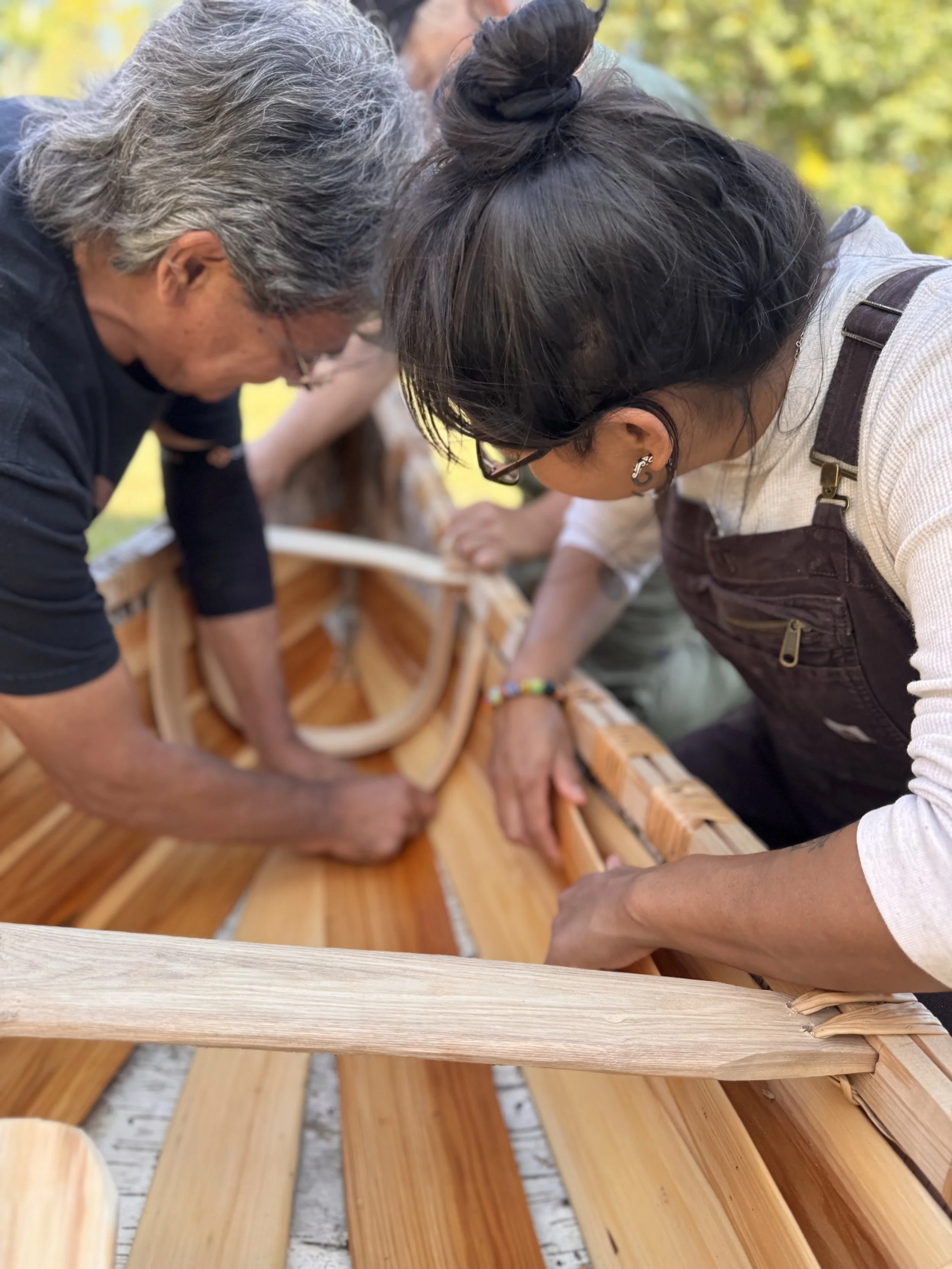
Learning how to insert Cedar sheeting and ribs and ensuring to be patient with materials so as not bust a hole in the bark.
Working with Chuck has taken me to several First Nation communities this past summer, and in each new place, I’ve had the privilege of learning about the unique strengths, histories, and challenges that many First Nation communities face. In just two weeks, bonds form through stories, teachings, language, laughter, and shared work, in an effortless way that makes them feel like they’ve existed forever. It’s great energy all around, and I love how the canoe attracts some of the most amazing people, like storytellers, language speakers, knowledge keepers, youth and Elders. The space is always filled with spirit and the relationships created are as sacred as the canoes themselves.
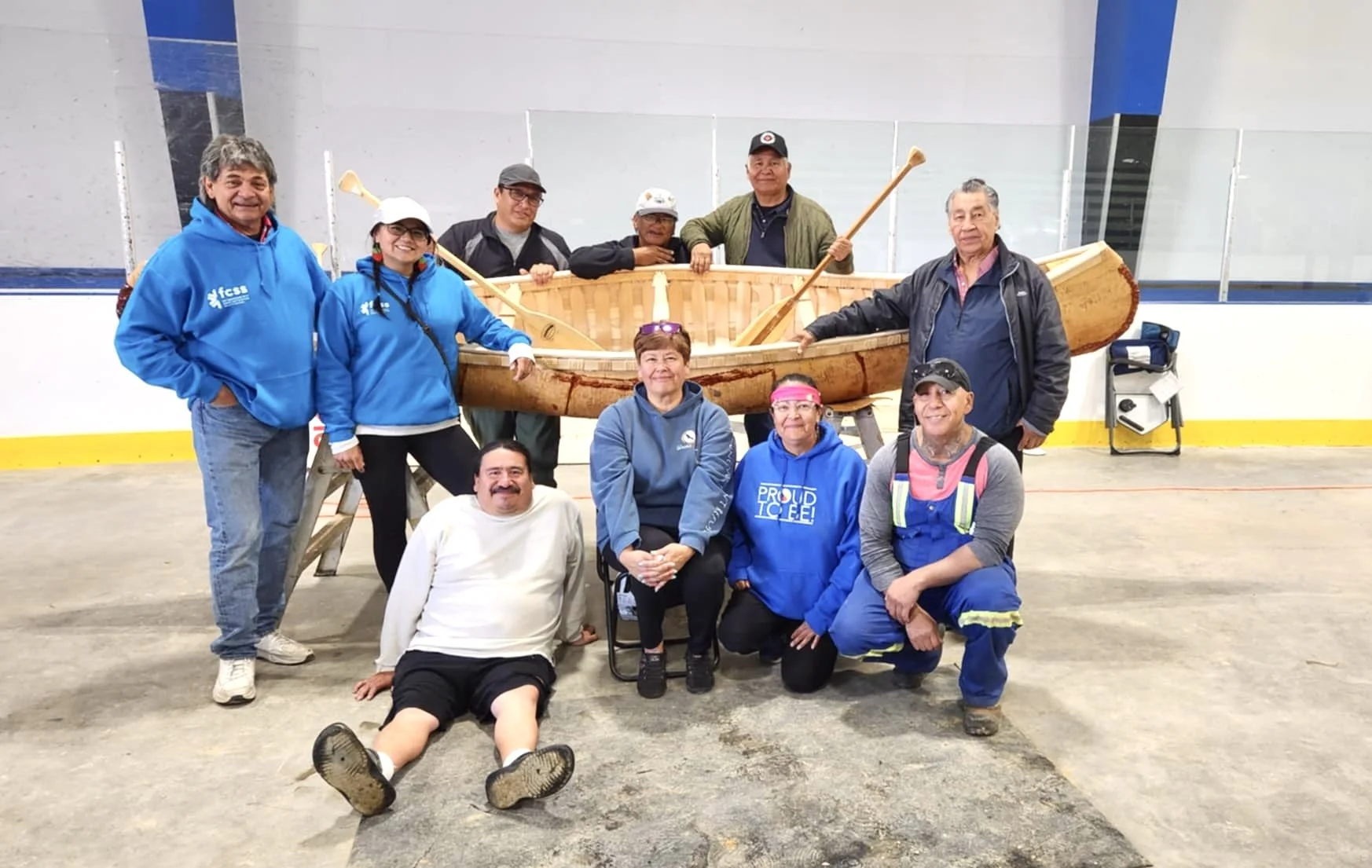
The amazing group in Wabasca standing proudly beside the canoe they put so much love and time in to.
One of my favourite parts of building canoes with Chuck is when he shares things his grandmother used to say, like, “my grandmother would have chewed me out for that.” It feels like she is right there with us, guiding the work. I didn’t have relationships with my own grandparents, so receiving her teachings through him feels like filling something I didn’t even know was missing. To me, building canoes is so much more than learning a craft, it’s also a relationship with everyone who came before, with the trees that offered themselves and with all the hands and hearts that go into the work. In so many ways it’s a bridge between what was taken and what still lives. For me, reconciliation isn’t only about facing the trauma our people endured, it’s about celebrating the brilliance and resilience that carried us forward and that will continue to carry us forward for many generations to come.
Through this work, the land has helped clarify who I am becoming and who I want to be. It has strengthened my confidence and identity as an Anishinaabe Kwe and has given me the courage to step more fully into advocacy, leadership, and responsibility in a good way. Guardianship showed me how many Nations across the country are doing this work every day, protecting their lands and waters and communities and creating real change. Just being a part of that work made me more curious, more invested and more proud of who I am and where I come from. The more I learn, the more I want to keep learning about my history, my First Nation, and the future we’re responsible for. We must always remember and share the teachings that were gifted to us so that we always remember the importance of caring for lands, waters, the animals, the treaties, and to always be thinking seven generations ahead.

This knowledge doesn’t live in textbooks or classrooms. It’s transferred through repetition, relationship, and time out on the land.
I never pictured myself stepping off the beaten path – from my role as a Guardian to now being a canoe builder – to do work most people don’t even realize still exists. And yet here I am, guided by ancestors, supported by Elders and encouraged by youth who all remind me why this work matters. When I’m on the land, it just makes sense. It feels like every part of my life has been quietly leading me towards “Creator’s work,” as Chuck refers to it. These teachings are much more than traditional skills, they also build confidence, identity and a sense of responsibility forward, long after the work is done. I may not be an official Guardian at the moment, but once a Guardian, you are always a Guardian. These teachings don’t end with us, they continue through us.
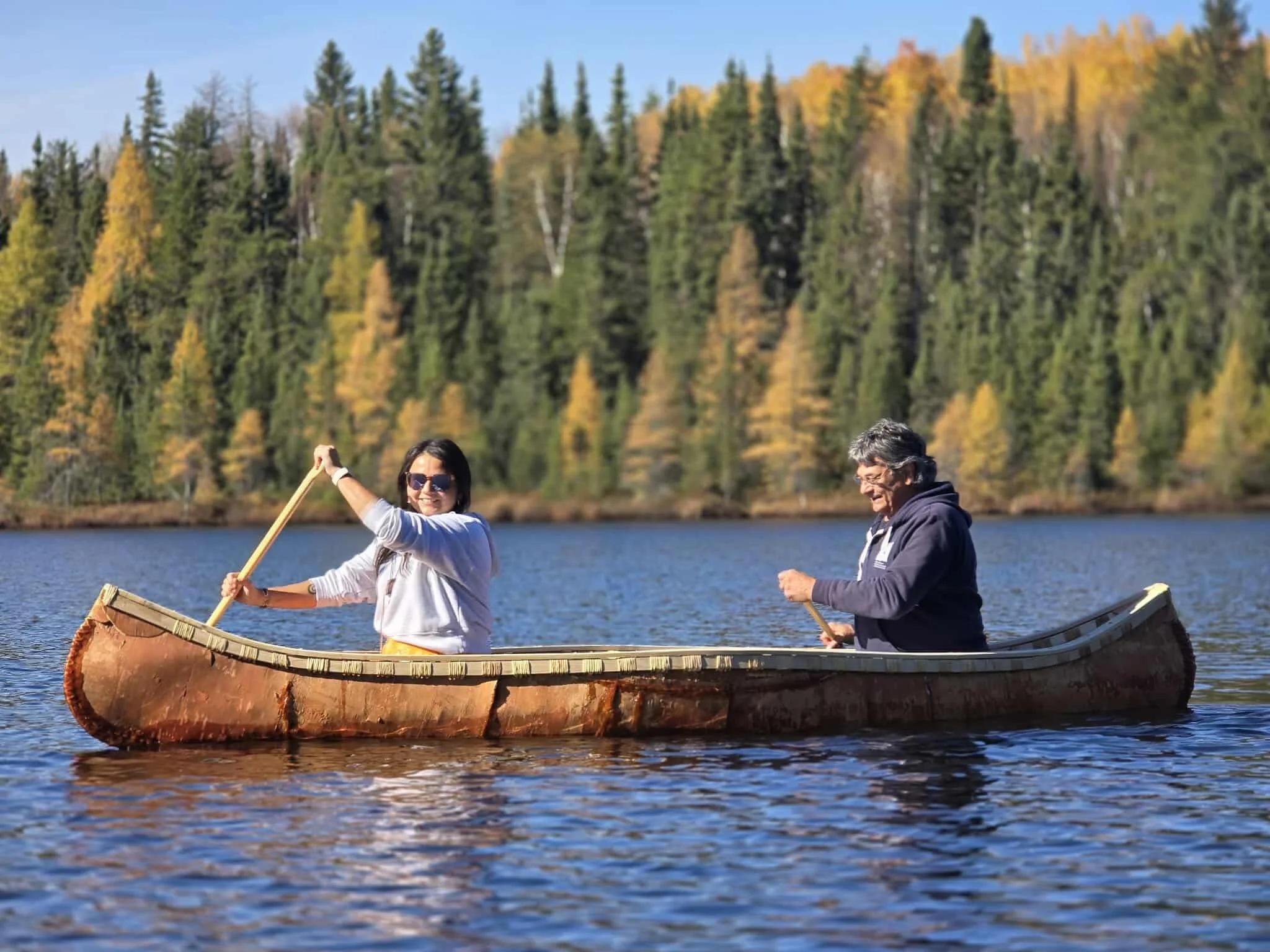
Launching the final canoe of the 2025 season in my home community, Brunswick House First Nation.